


by Victor Soares
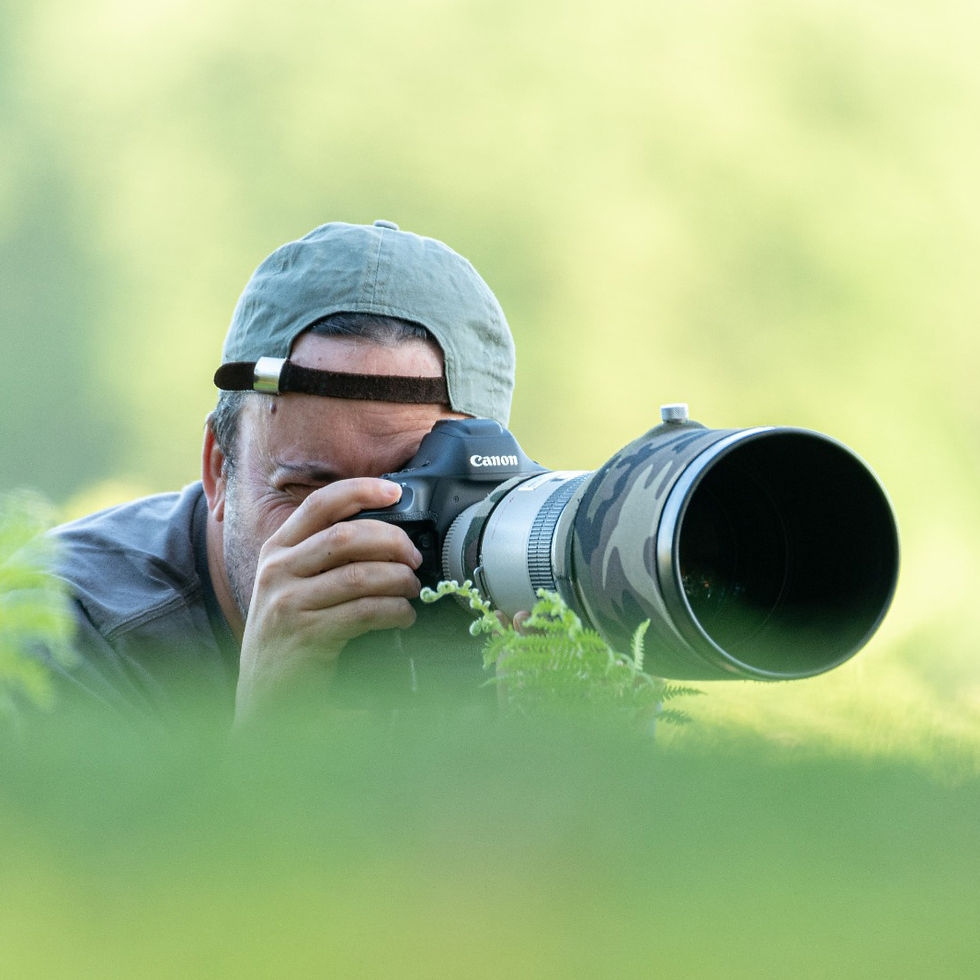
Eye-tracking AF
Eye Tracking Autofocus: How It Works, When To Use It, and Where It Falls Down
If you have bought a camera in the last few years, you have probably seen "eye tracking AF" listed proudly on the box. It sounds like something from a spy film, but it is now one of the most useful tools in modern photography. This post looks at how it actually works, when it is worth switching on, what problems it still has, and how the big three brands (Canon, Nikon and Sony) compare.
How Eye Tracking Actually Works
Eye tracking autofocus uses the camera's image sensor and processor to identify a human (or animal) face within the frame, then narrows its focus further to lock onto the eye itself. This is done through a form of machine learning called deep learning, trained on huge numbers of sample images so the camera learns what an eye looks like from many angles, in different lighting and even when partially covered by hair, glasses or a hand.
Once the system spots an eye, a small green (or coloured) box appears over it in the viewfinder or on the screen. As your subject moves, the camera continuously re evaluates the scene many times per second, shifting the focus point to follow the eye rather than relying on you to move a focus point manually. Many systems now also track the whole body and head, so if the eye becomes hidden the camera can keep tracking the person and reacquire the eye the moment it reappears.
Most modern systems can also recognise animals (dogs, cats and birds are common) and, in some cases, vehicles such as cars and aeroplanes, which is handy for motorsport and airshow photography.
When To Use It
Eye tracking is brilliant in situations where focus needs to be precise and your subject will not stay still. Some good examples include:
Portrait sessions, where sharp focus on the eyes is the single most important technical requirement of the image
Weddings and events, where people move unpredictably and you rarely get a second chance
Sports and wildlife photography, where subjects are fast and focus needs to track them constantly
Street and candid photography, where you want to react quickly without fiddling with focus points
Video work, especially vlogging or interviews, where continuous focus on a face while moving is essential
It is less useful, and sometimes best switched off, for landscapes, architecture, still life or any scene without a clear human or animal subject, since the camera has nothing appropriate to lock onto.
The Problems With Eye Tracking, Specifically For Wildlife Photography
Despite how impressive it is, eye tracking is not perfect.
It can lock onto the wrong subject. In a crowded scene, the camera may jump to an animal in the background rather than the one you intended, particularly if that animal's face is more clearly lit or facing the lens.
It struggles in low light or with obstructions. Anything blowing across the face (especially side-on) can confuse the system. This is true of a lot of natural objects: grass, leaves, rocks, etc. This causes the camera to hunt or to fall back to general object detection.
It can be a battery drain. Continuous subject recognition asks a lot of the processor, which can noticeably reduce battery life during long shooting sessions. Being in the wild with drained batteries can be a show stopper!
It removes a degree of creative control. Photographers who like to focus deliberately on an eyelash, a tear, or an off centre point for composition reasons, can find the system overriding their intention, though most cameras let you nudge the focus point within the tracking area, you may not get time to do this accurately.
It is not equally reliable across all conditions. Backlit subjects, fast erratic movement and very small or distant faces can all cause tracking to drop out mid sequence.
How The Three Main Brands Compare
Technology is constantly evolving, so some of the information contained here may change quickly or may already have been superseded
Canon
Canon's Dual Pixel CMOS AF II system is widely regarded as one of the most dependable for eye detection, particularly on models like the EOS R5, R6 and R3. Tracking tends to be sticky, meaning once it grabs an eye it holds on well even through obstructions, and the system's animal detection covers dogs, cats and birds convincingly.
Nikon
Nikon's 3D tracking combined with its subject detection AI (introduced heavily from the Z9 onwards) is excellent at re acquiring a subject after it briefly leaves the frame. Nikon extended its recognition to include cars, motorbikes, trains and aeroplanes earlier than some rivals, making it a strong choice for motorsport and aviation shooters.
Sony
Sony was arguably first to popularise reliable real time eye AF for stills and video, and its system remains extremely fast and accurate, especially on the A7 IV, A9 series and A1. Sony's tracking is praised for being tenacious in fast action and for offering excellent animal and bird eye detection, though some users find it can be almost too aggressive about switching subjects in busy scenes.
Final Thoughts
Eye tracking autofocus has changed the way many photographers work, taking a technically demanding task and making it largely automatic. It is not flawless, and understanding its quirks will help you know when to trust it and when to take back manual control. Of the three brands, Sony and Canon currently lead for general reliability, while Nikon stands out for subject variety and reacquisition after a subject briefly leaves the frame.
Travel With Us

Travel With Us


Photography