


by Victor Soares
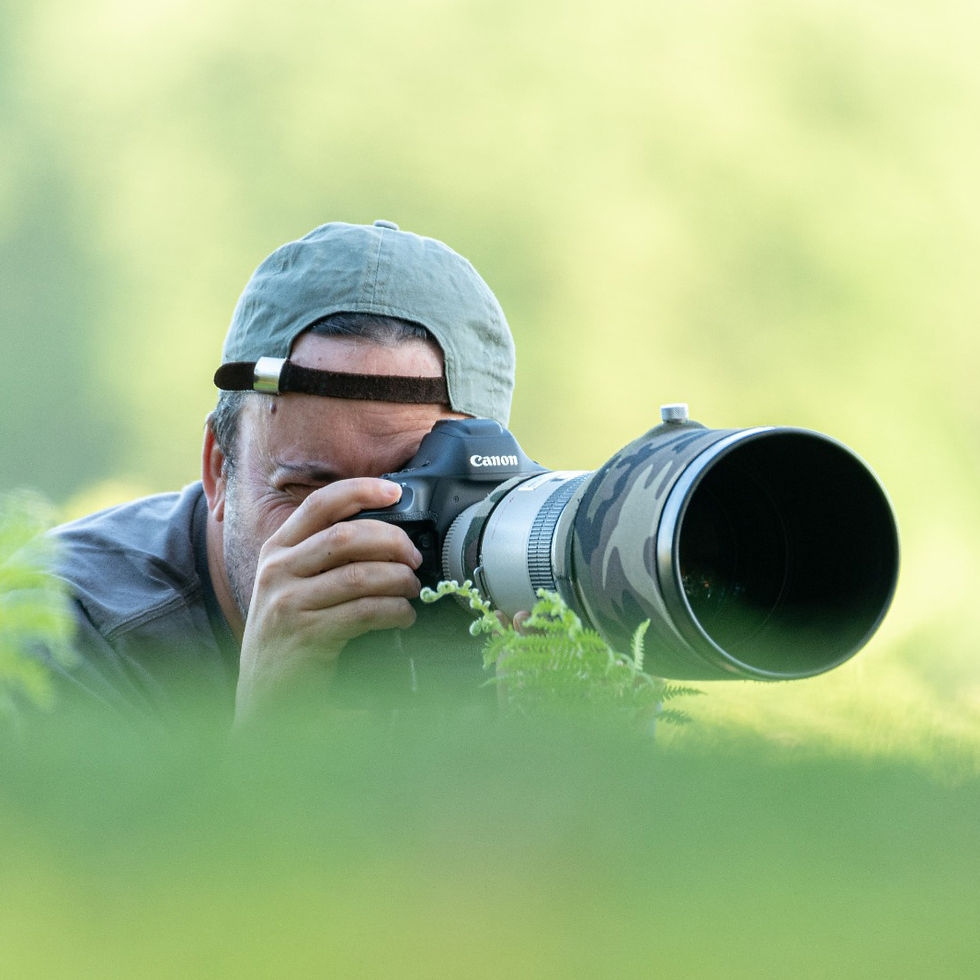
Making The Most Of Hides
How to Make the Most of Photography in a Hide: A Complete Guide for Wildlife Enthusiasts
(All images are taken by me, from hides)
I’ll be the first to admit that hides are not my favourite way to do wildlife photography. I’d much rather be out and about, following a trail, keeping my ears pricked for calls in the hedgerow, or watching a fox slink across a field. But sometimes, a hide is absolutely necessary. There are certain shots, certain species, and certain situations where no amount of walking quietly or blending in will get you close enough. And when those moments arrive, a hide isn’t just useful—it’s the only way.
Wildlife photography, when you boil it down, is about patience and anticipation. You sit quietly, camera ready, hoping the natural world unfolds in front of you. A hide gives you the best chance of seeing animals up close without them scarpering the second they catch sight of you. Whether it’s a kingfisher arrowing into a river, an owl quartering the fields, or a family of badgers playing outside their sett, a hide can put you right in the middle of it—if you know how to make the most of it.
This guide will walk you through exactly that. From choosing and preparing your hide, to the kit you’ll want to take, the settings that work best, and a few tips on patience and fieldcraft, we’ll cover everything you need to know to come away with images you’ll be proud of.
1. What is a Photography Hide and Why Bother?
Let's start with a bit of theory ...
A hide (or blind, if you’re reading from across the pond) is basically a shelter that lets you watch and photograph wildlife without being spotted. They come in all shapes and sizes, from simple camo pop-up tents you can chuck in the boot, and use to hide yourself, to solid wooden huts at nature reserves, often with benches and viewing slats.
The main point of a hide is to reduce your presence. Wildlife that would normally leg it at the first whiff of a human will often relax into its normal behaviour if it doesn’t realise you’re there. And that’s when you get those magic moments:
A woodpecker feeding its young in the nest
Bears suckling their young (this happened right in front of us, this year! - image below)
A fox cub peeking nervously into the open

Without a hide, most of those moments would vanish before you even lifted your camera.
2. How to Choose The Right Hide
Not all hides are equal, and what works best depends on your subject, location, and how mobile you want to be.
Permanent vs. Portable
Permanent hides: The ones you find at RSPB reserves, nature parks, or private setups. They’re solid, weatherproof, and often positioned where wildlife activity is regular—like by a pond or reed bed.
Portable hides: Pop-up camo tents, bag hides, or even throwing a camo net over yourself and some sticks. They’re lighter, more flexible, and great if you want to try new spots.

What to look for when setting up your own hide
Viewpoint: Your lens should ideally be at the same height as your subject, as this is one of the best practices for wildlife photography. Low-level hides give the best angle and many private setups charge a premium for submerged hides.
Background: A clean backdrop (sky, water, woodland) helps keep the focus on your subject.
Access: Some hides require a bit of a trek—fine if you travel light, less so if you’re lugging a 600mm lens and tripod.
3. Getting Ready
Preparation often makes the difference between a brilliant day and a wasted one, so here are some thoughts to consider:
Do Your Homework
Learn when your subject is most active. For example, owls are busier at dusk, kingfishers tend to return to the same perch, and deer movements change with the rut.
Think about the season. Breeding time can bring plumage and behaviour at its best, but also means species are more sensitive.
Know the habitat. No point sitting in a woodland hide hoping for waders.
Pick Your Time
Golden hours: Early morning and late evening light can transform even ordinary shots.
Light changes: Be aware of the position of the sun. Backlit images can be fantastic but sun in your eyes for 4 hours can also be horrible.
Weather: Don’t be put off by drizzle or fog. You should definitely be out getting shots during "inclement weather" and being in a hide has the advantage of providing some weather screening. "Bad" weather conditions often produce atmosphere and softer light and something a little different.
Pack the Essentials
Spare batteries and memory cards (you’ll need them).
A cushion or folding stool (if it's your hide). There is nothing that ruins patience quicker than a numb backside.
If you expecting a long session in the hide, then a flask of tea or coffee and a few snacks.
Lens cloths, rain covers, weather proofing - you never know with the famous British weather.
4. What Kit Do You Need?
Being in a hide changes how you approach gear. You’re not carrying it for miles, but space can be tight.
Camera: Something with a fast frame rate and good low-light performance is ideal. If you have it or you have the space for it then a second camera is also a good option.
Lenses: This depends hugely on your anticipated targets but generally a telephoto lens (300–600mm) is essential. A zoom offers flexibility, but primes often give sharper results. Personally, I prefer prime lenses.
Support: Tripods with gimbal heads are brilliant if you’ve got room, but in smaller hides a beanbag on a window ledge can be more practical. It's also a good idea to ask what supports are available at commercial hides as it helps with accurate preparation.
Silent shutter: If your camera has one, use it. The clack of a shutter can send skittish wildlife fleeing.

5. Fieldcraft In A Hide Is Irrelevant Right? WRONG!
The hide helps, but your behaviour inside it matters just as much (if not more).
Wildlife Isn't Stupid: Just because you’re in a hide doesn’t mean you’re invisible. Wildlife is usually aware of the hide, but since it doesn’t perceive it as a threat, it tolerates its presence (and whoever is inside). However, one wrong move can change everything: the hide shifts from being a “safe” object in the environment to something dangerous, and the animals will quickly learn to avoid it.
Stay still: Fidgeting, tapping, or rustling sweet wrappers is a sure way to spook wildlife.
Blend in: Wear muted colours even inside the hide. Avoid flashing a phone screen or a torch.
Patience: You might wait hours before anything happens. That’s the deal. When it does, it’s worth every minute.
Rules: Listen to your host and your guide. The rules they have in place are there for a reason and they have probably been learnt over time, the hard way. No one is there to spoil your fun, but rather to enhance it. Be respectful and follow the rules.

6. Composing Shots from a Hide
One of the biggest complaint of hides (and certainly something I struggle with) is that hides can limit your angles and everyone inside the hide gets "the same shots". However, they also make you think differently.
Go eye level: Shots feel far more intimate when you’re at the animal’s level. This isn't always possible and should never be attempted at the expense of quietness.
Think wider: Don’t only aim for portraits. Show the environment too, it tells a story.
Anticipate: Experience and planning count. Learn the signs. A bird fluffing feathers might take flight. A fox sniffing the air might bolt. Be ready, not only for the action but also be ready to take the photo you want to. Prepare your shutter speed, aperture, etc.

7. But What Camera Settings Should I Use?
Wildlife doesn’t wait for you to faff with dials. Set up for flexibility:
Shutter speed: For birds in flight, I always use my own "duck-method" as a good starting point to ensure frozen action:
As big as a duck = 1/2000 (ducks, pigeons, etc)
Larger than a duck = less than 1/2000 (herons, eagles, etc)
Smaller than a duck = more than 1/2000 (garden birds)
Aperture: Wide Open (f/2.8–f/5.6) for soft backgrounds, narrower (f/6.3–f/9) if you want more in focus. However, distance to the subject also plays a vital role in depth of field.
ISO: Don’t fear higher ISO—it’s better to have a sharp, slightly noisy shot than a blurry “clean” one. Everyone's tolerance for noise is different and you will no doubt have a value in mind that you are happy with - that may be ISO5000 or it may be ISO800.
8. Working with Light
Light is everything, and hides don’t always make it easy.
The sun is your source of light - be aware of it's intensity, position and likely changes. The conventional thought is that ideally, the sun should be behind you, but this is such a restrictive condition for creatives, that I don't want to preach this. Rather be aware of the light. Harsh, soft, dappled, gloomy, dark, front lit, back lit - these are just some of the possibilities.
Use indirect light such as reflections (on water, snow, even wet leaves) to bounce light back onto your subject.
9. Playing Fair - Ethics Above Everything!
It’s easy to get carried away chasing the perfect shot, but ethics always come first.
NEVER disturb nests or young or pose a threat to mothers with young.
DON'T overstay in a hide if it’s clearly making animals uneasy.
SUPPORT reserves and operators who put wildlife welfare first. If you see something that just doesn't feel right, speak up!
Remember: the welfare of the subject is worth more than any photo.
10. Editing Afterwards
Even great shots benefit from a bit of post-work.
Be aware of where you tend to use the image. Uploading to Facebook, where people usually browse on tiny screens like their phones, is very different to an image adorning a billboard.
Crop thoughtfully. If you like tighter shots then by all means tighten your composition but don’t butcher the resolution. If the image starts to pixelate then it will be very noticeable and ugly.
Adjust highlights and shadows to bring out detail in dark and bright parts of an image.
Adjust exposure and contrast for feather or fur detail.
Use noise reduction carefully, especially for high ISO images.
Personally, keep it natural. The goal is to show the animal as it was, not overcook it.
11. Telling the Whole Story
A hide session doesn’t need to be about “the one shot.” Think like a storyteller and pretend you were writing a book with your images:
Wide shots of the setting, tell about the scenario
Close-ups of the subject, creates intensity
Action or behaviour sequences, has the wow factor
Mood shots of mist, rain, sunset light, invokes feelings in viewers

Together, they give a fuller picture of your experience and the animal’s life and give your time in the hide a wider perspective
12. Common Pitfalls
Tunnel vision: Don’t get so fixated on one thing that you miss something happening to the side.
Leaving early: Wildlife has a knack for showing up right after you pack away - if it makes sense to, then stay.
Comfort: If you’re cold, wet, or sore, your concentration will go. Be prepared.
Messy backgrounds: Always check what’s behind your subject. The subject is the interest, but the background is the majority of the shot and can therefore make or break your shot.
13. Want To Join?
I currently run a number of trips designed to bring you closer to nature through the use of hides. I carefully select well-established hides that provide both comfort and quality and ones that I have personally used before and am always happy to return to. While there are thousands of options out there, the hides I work with are ones I can vouch for, giving you the best chance of securing that special shot you’ve been hoping for.
Details of my trips are advertised on the side of the blog — come and join me!
Final Thoughts
Using a hide isn’t everyone’s cup of tea. I still prefer the freedom of moving about, but when a hide is needed, it’s often the only way to get truly close, natural images. Yes, it can be slow. Yes, it can test your patience. But when that kingfisher finally lands on the perch, or the badger trots into view as the light fades, all the hours of waiting fade away.
More than just a tool, a hide is a reminder of what wildlife photography is really about: slowing down, blending in, and respecting the rhythm of the natural world. And in the end, those are lessons that make every photo all the more rewarding.
Get out there, and have fun!
Travel With Us

Travel With Us


Photography